





Why does all my content feel kind of boring?
Client: Haute Couture Award Austria
Usually content feels boring because every decision was made to avoid a wrong answer instead of to find the right one. Safe framing, flattering light, a likeable face, an inoffensive setting. Nothing technically wrong — and nothing anyone will remember.
Here’s what’s counterintuitive: content that provokes a strong reaction — even discomfort — consistently outperforms content that everyone finds pleasant. Emotional polarity, the feeling of “this is not for me” or “this is exactly for me,” is what makes people stop, share, and remember. Content optimised for universal approval gets universal indifference.
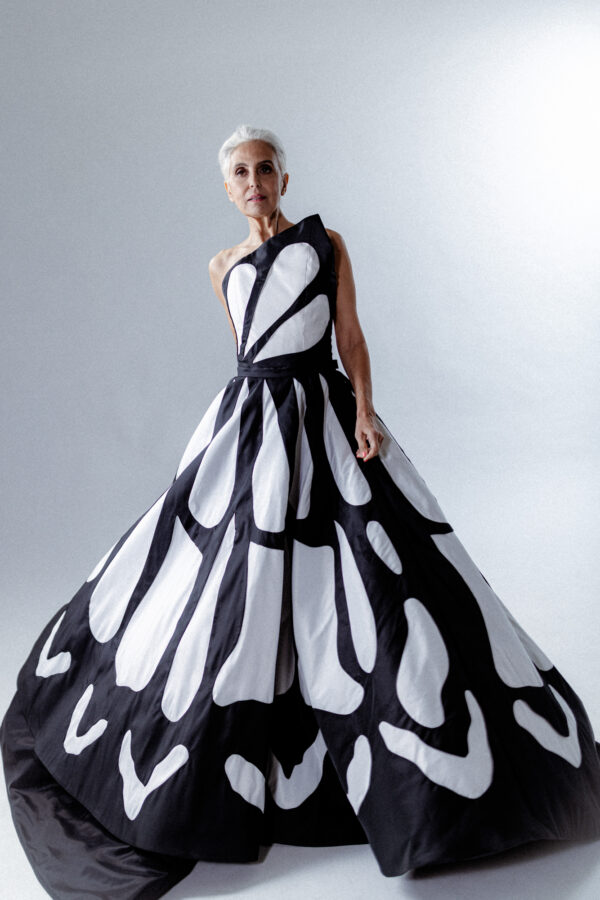
For the Haute Couture Award Austria we photographed a woman with as much personality as the clothes themselves. A person who wears the dress — not a dress that happens to have a person in it. The industry has spent decades overlooking models with age and history, operating under the assumption that everyone’s goal was to be young. But that assumption is crumbling — because the people most likely to actually buy a couture dress aren’t chasing youth. They know who they are. They don’t compromise. They want something made for them — not something made for everyone. That specificity shows.
The same specificity applies everywhere: the work that actually changes how we think is rarely agreeable with everyone (and neither are the people creating it.) A point of view will cost you some of the audience. But it will earn you the right one.
Stop optimising for approval and start optimising for recognition. Most brands look similar because they're making the same decisions — following the same references, using the same visual language as the category leaders, trying to appeal to the broadest possible audience. Standing out requires making a choice that not everyone will like. A specific colour that's yours. A way of photographing that's yours. A tone that couldn't belong to anyone else. The brands that stand out didn't find a gap in the market. They committed to a point of view and held it long enough for people to notice.
Because they made a decision and committed to it. Excitement in visual communication comes from specificity and confidence — a brand that knows exactly what it stands for and isn't trying to hedge its bets. Exciting brands polarise slightly. They're not for everyone, and they're comfortable with that.
Because iconic requires repetition of something distinctive. Most brands change direction too often — chasing trends, following what performed last month, reacting to what competitors are doing. Iconic visuals are built over time by committing to a consistent point of view, even when it feels boring from the inside.
Because it was made to be safe rather than true. Safe content follows category conventions — it looks like what a brand in your space is "supposed" to look like. True content comes from a specific perspective that only your brand has. The question to ask before every shoot: what would this look like if we stopped looking at what everyone else is doing?
Usually gradually, and then all at once. It happens when decisions are made by committee, when trends replace strategy, when the fear of being wrong overrides the instinct to be specific. The fix is not a rebrand. It's a question: what did we used to believe that we stopped saying out loud?