PROOF OF HUMAN
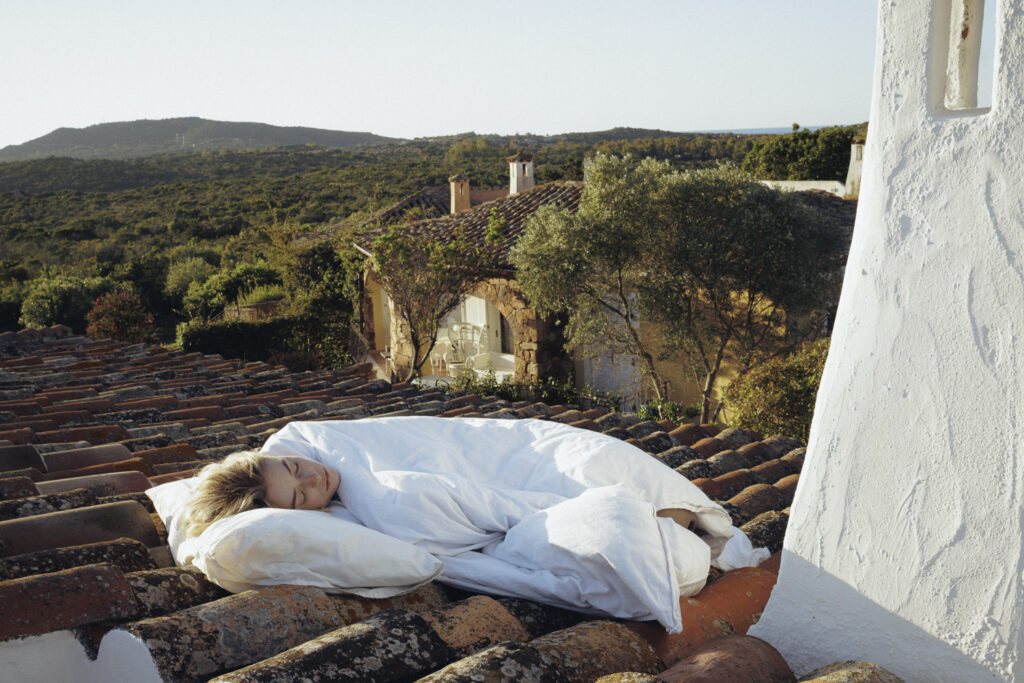
Proof of human (Making the making of) engages with a growing need within visual culture: the
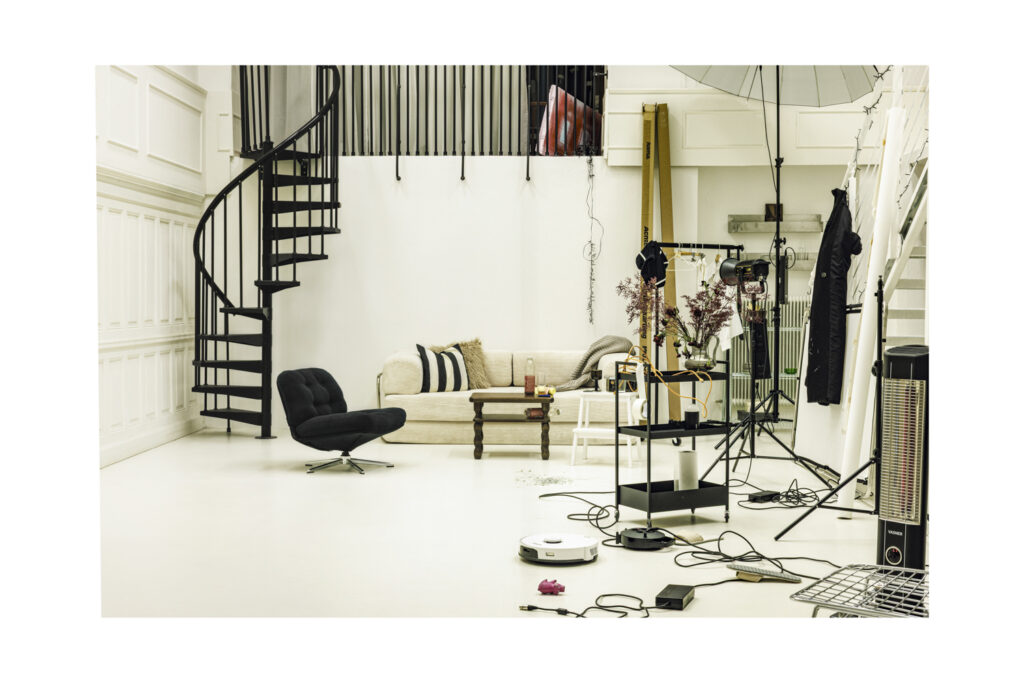
desire to be able to trust one’s own eyes. In the context of the AI boom, showing an image is increasingly no longer enough. Alongside the result, the process is put on display — the shoot, the team, the setting, the “proof” that humans were involved. Proof of human has become part of the aesthetic. This project starts precisely there. Its point of departure is a real image from the archive of Atelier Égalité, photographed with a small team, outdoors, in nature. For this image, a fictional behind-the-scenes narrative is constructed. The situation is translated into an oversized studio setting: a large team appears to work on the scene, with technology, lighting, production, and workflows rendered in an almost realistic way. The making-of tells a story that never took place, yet appears credible at first glance. What is usually meant to generate trust (backstage material, processes, insights) becomes fiction here. The relationship between image and proof is reversed.
Team credits (Photography): Hair & Make-up: Susu Babboleh, Model: Simone Seckellehner, Location: Tina Konsel
CURIOSITY KILLED THE CAT
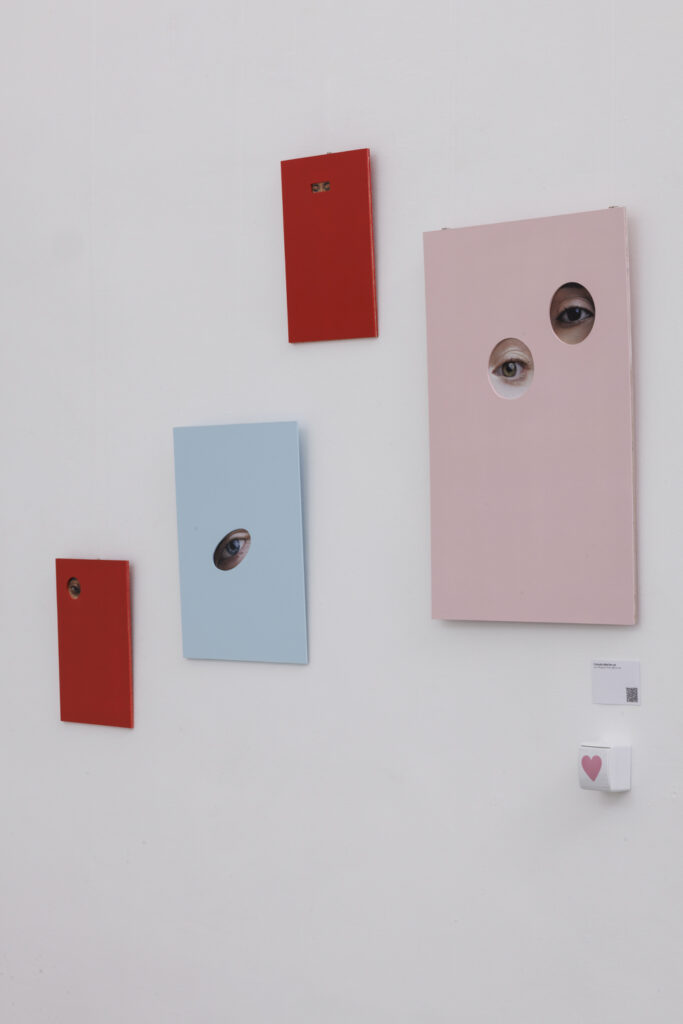
You can’t even imagine what’s behind these colorful facades…
In Curiosity killed the cat, the images are almost entirely covered by colored wooden panels. What is usually hidden in acts of anonymization is here the only thing left uncovered: the gaze becomes the hook.
A hook promises novelty, revelation, access. It suggests that something important is waiting just beyond the click. We click to be informed, to stay in the loop — but clickbait rarely delivers. Titles are more seductive than their content. Stories flatter curiosity without satisfying it. Today, content must appear interesting enough to justify its existence.
But as everything becomes optimized for attention, interest itself begins to erode.
This project asks: would we still click if we knew we would never get a clear answer? If certainty was impossible?
The photographs are physically altered in a way that makes uncovering them destructive. The wooden layers cannot be removed without permanently damaging the image beneath. The promise of revelation is real — but its cost is irreversible.
The only remaining option is research: searching online for the “original” image. But even then, certainty remains out of reach. The image could be altered. Or maybe there isn’t any image beyond what is already revealed?
Why do we even want to know? What do we expect to find? And why do we keep clicking — even when we already know we will be disappointed?
ARCHIVE OF ALMOST NOTHING
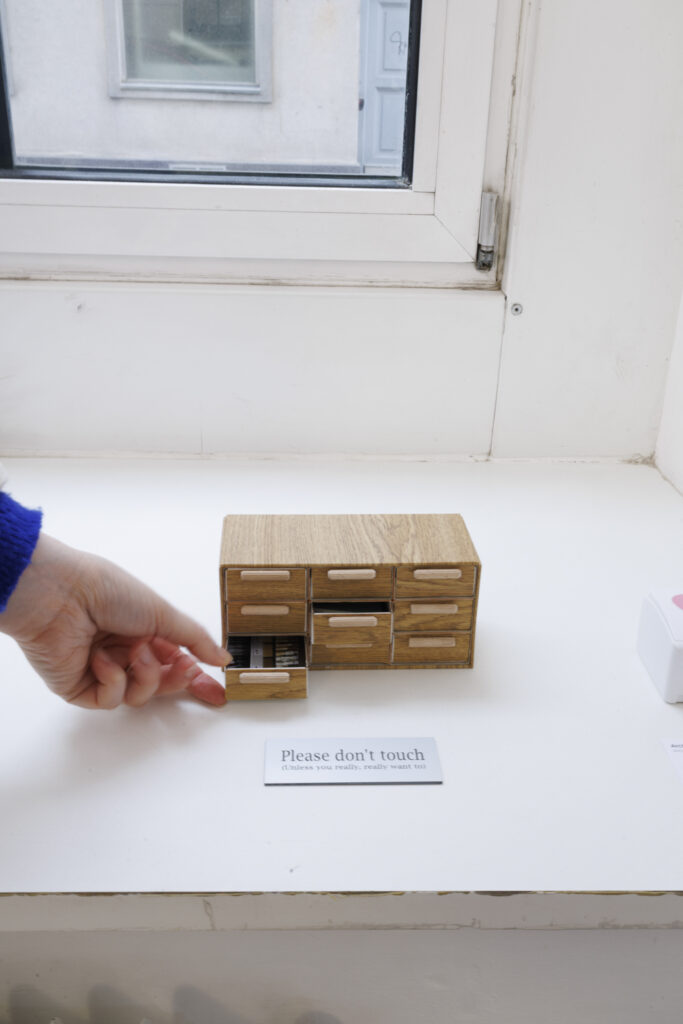
This project takes the form of a very small archive: each drawer contains randomly selected photographs and screenshots taken from the everyday use of our phones. These are images made with little intention or effort. Blurry snapshots, accidental screenshots, moments never meant to be remembered. Images we rarely, if ever, return to. They pile up over weeks and months, quietly filling our devices. In an age of constant image production, these kinds of images may represent the overlooked
majority. The reduced scale of the images reflects an assumed lack of importance. Their size suggests disposability, insignificance, low value.
The work asks simple questions: What is an image worth in 2026? Is value tied to effort, intention, and quality or merely to the fact that something was
captured at all? The archive is displayed alongside a small plaque that reads: “Please don’t touch (unless you really, really want to).” Visitors are invited to open the boxes, to browse through the images, to handle these memories, even take some of them home. What is usually private, forgotten, or deemed unworthy of attention becomes accessible. The act of touching gives the images more meaning than they were ever intended to have.
15 MINUTES TOO LONG
15 min too long is a work about attention — and about how demanding it can become. Starting from the widely known idea of “15
minutes of fame,” the project shifts its focus away from being seen and toward the act of watching. The work consists of two videos. At its center is a presentation lasting approximately 15 minutes, conceived as a documentary narrative. It follows the emergence of Atelier Égalité, tracing creative developments alongside the tensions, questions, and difficulties that have accompanied this process. Photographs and videos from several years of work are interwoven. Short sequences in which we ourselves appear introduce the presentation. What begins as accessible and informative gradually turns into a prolonged succession of personal scenes and often excessive explanations of our working methods and thought processes. Questions are answered that no one asked. The presentation is shown to a single person. They sit alone in a room, in a comfortable armchair. Snacks, a drink, and their phone areplaced within reach. The viewer is not a stranger, but a friend — someone who knows us, supports us, and values our work. Throughout the entire duration, the person is filmed by multiple cameras. They are aware of this. We aim to create a pleasant atmosphere. And yet we expected, at some point, the almost inevitable to happen: the hand reaches for the phone. the gaze shifts away from the screen. a quiet negotiation with one’s own sense of politeness begins. 15 min too long creates a situation in which scrolling is not possible — only enduring, drifting, or looking away. A situation in which politeness, curiosity, affection, and impatience overlap. How much are we willing to endure — for others? When does attention become a burden? At what point does interest turn into boredom, overload, or rejection? And when do we allow ourselves to mentally check out, even though we are physically required to remain? When Andy Warhol spoke of “15 minutes of fame” in the 1960s, it was meant as an exaggeration — an ironic comment on the fleeting nature of attention. Fifteen minutes were considered an absurdly short span of time. From today’s perspective, this number feels displaced. Fifteen minutes are no longer casual; they are noticeable, demanding, long. In a present shaped by constant clicking and immediate distraction, fifteen minutes become a genuine imposition. Is it presumptuous to devote 15 minutes to oneself — or to one’s own work? Is 15 minutes a long time? Or, within the context of an existing relationship, is it a reasonable demand? Considering the many hours that went into producing the photographs and videos, is it perhaps even a short amount of time? And who ultimately decides when something becomes a waste of time?
SELF PORTRAIT OF A VIEWER
Self-portrait of a viewer explores a contemporary paradox: we no longer experience culture for ourselves, but for the possibility of proving that we have experienced it.
In an age where attention has become a currency, the museum visit shifts from a private encounter with art to a stage on which visitors perform their identity, their intellect, their taste. The artworks become silent witnesses to a choreography of self-presentation.
This photographic series reverses the gaze: shot from the imagined perspective of an artwork, the images show visitors dressed in hyper-curated outfits — looks that declare their cultural engagement before they even step into the room.
The project examines how cultural spaces are increasingly inhabited as sets: places where individuals film themselves, narrate their experience while having it, and optimize every gesture for future display.
Is the artwork itself still important when the primary goal shifts from seeing to being seen seeing?
Team credits: Hair & Make-up: Susu Babboleh, Models represented by Stella Models: Zumin, Amelie, Martin, Maggie
CAMERA READY
In our smartphone-centric society, social media influences physical space more strongly than is often assumed, as potential visibility has to be constantly considered.
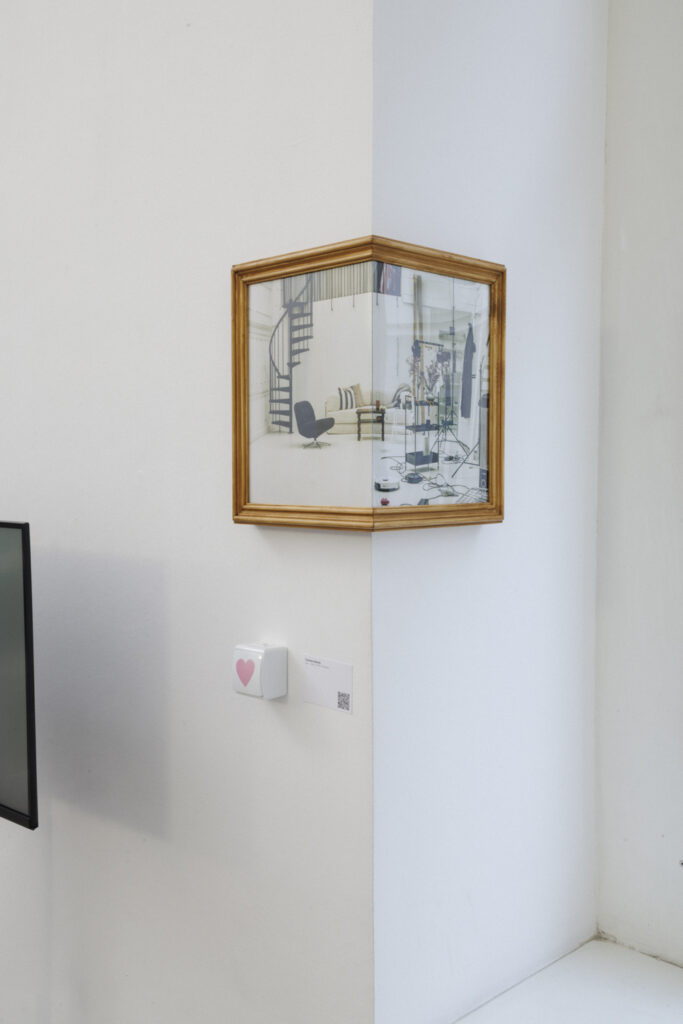
The work Camera Ready addresses this condition of permanent presentability, using our studio as its point of reference.
The custom-built frame forces viewers to move. It makes perspective decisive: what we see depends on where we stand — but what we do not see nonetheless remains part of the same space.
The room is divided. On one side: tidy, presentable, almost sterile. On the other: things left behind, seemingly uncontrolled chaos.
The work does not ask which side is “real.” It shows simultaneity. What becomes visible is always the result of a decision.
Even where disorder is consciously staged today — as intentional clutter, as embraced mess, as a sign of authenticity — it remains part of the presentation. Social media is performative by design.